
The World Belongs To Those Who Read
By Kelly Patten
Every evening, around 6pm, we start our daughters’ bedtime routine. At times it feels like a complete circus with all the pieces of the bedtime puzzle needed for a toddler and a newborn. Perhaps your evenings also feel a bit chaotic?
My toddler shrieks and moans about hair washing to the point the neighbors probably think we are waterboarding her. My six-week-old hits her witching hour right about when we are wrestling both into pajamas. More tears ensue; we beg the toddler to brush her teeth, and finally, it's time to read our bedtime stories.
It can be tough to muster the energy for an engaging read-aloud before bed, especially when your child wants to read the same story over, and over, and over. The Gruffalo again?! I feel your pain. However, the benefits of reading aloud to your child cannot be overstated.
What are the benefits of reading aloud?
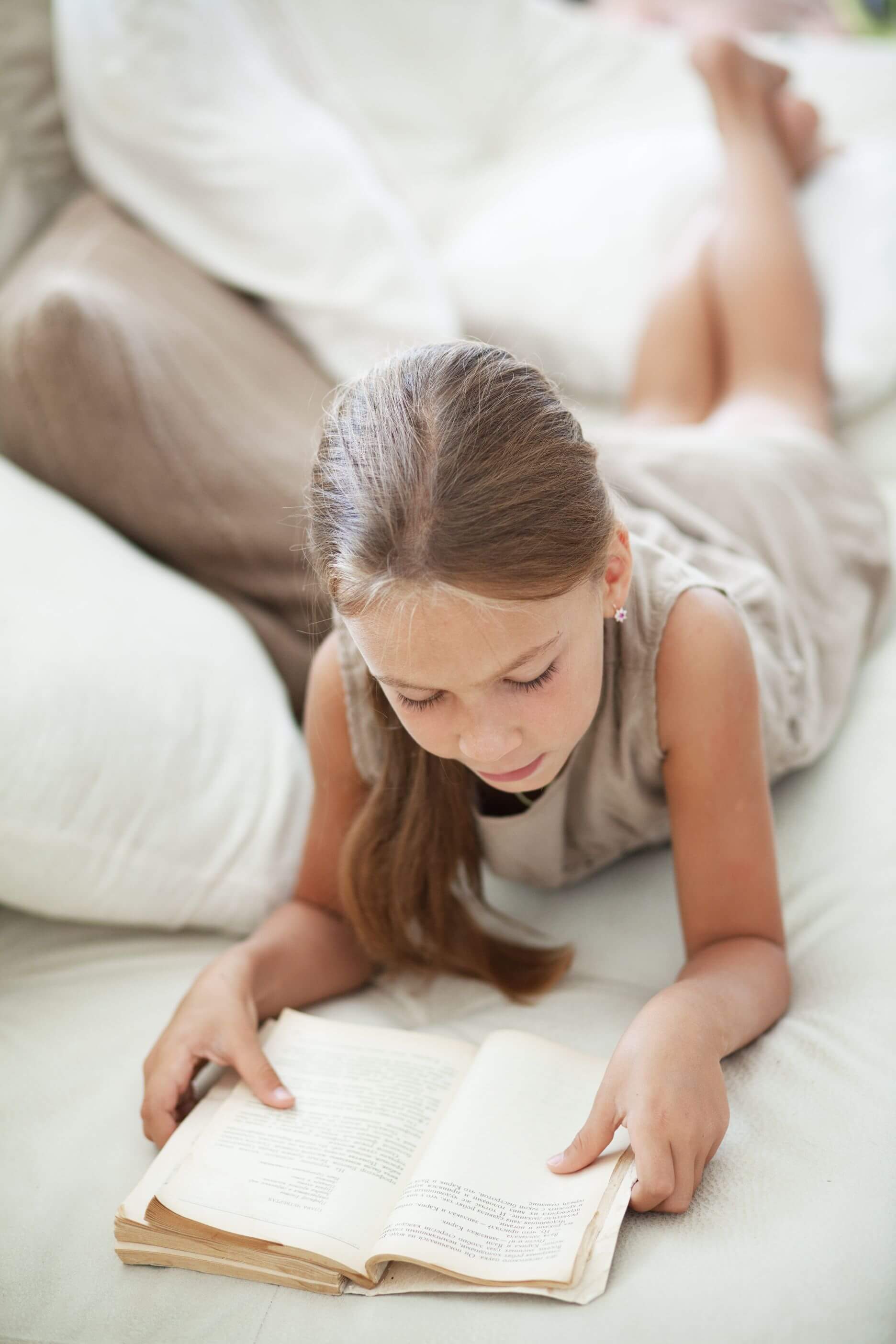
Reading aloud is a powerful experience. A study from the Journal of Developmental and Behavioral Pediatrics showed that parents who read at least one book per day with their child will expose them to over a million more words than children who are never read to by the time they reach kindergarten (1). The simple act of reading a book together expands your child’s vocabulary and deepens comprehension. You may have heard that books offer us “windows and mirrors”. Not only does reading expand background knowledge, it also gives your child the chance to identify and connect with characters, problems, and places. Reading fiction stories has been shown to promote social–emotional intelligence and greater empathy in the reader.
How can I support my child?
Start from birth and make it a habit. Reading aloud can start the day a child is born. Hearing your voice and cuddling is an excellent way to bond with a new baby.
As your child gets more mobile, it can feel frustrating to try to read together. You sit down on the couch to read, and two pages in your toddler jumps up and runs off to play with something new. Continue reading as they play and hold up the book to share the pictures even if they are across the room.
Reading aloud doesn’t have to stop once your child is school-age; instead choose chapter books to read aloud as a family. Consider doing a buddy read with preteens or teenagers. Read the same book and choose your favorite parts to share and read aloud.
Introduce concepts of print
As adults, we take for granted all of the pieces that work together to tell a story. Frequently point out the book cover and mention that the author is the person who writes the words. As you read, share with your child that books use both words and pictures to tell a story. Use your finger to track the words on the page.
Make it interactive
Are there noises or actions in the book? For example, in “The Very Hungry Caterpillar” a page reads: “One Sunday morning the warm sun came up and – pop! – out of the egg came a tiny and very hungry caterpillar.” On the word “pop” you can model shouting it out and jumping up. No energy for jumping up? Encourage your child to jump or use your hands to act out actions and words.
Think aloud
As you read, share your inner dialogue with your child. Occasionally pause and pose a question or talk about a picture. Hmm, I wonder how that character is feeling? What do you think will happen next? Uh oh, I think there’s a problem. I love this picture; it makes me laugh! Model for your child what it looks like to be an active reader.
Being a parent is tough. We are constantly barraged with the next best thing. From baby-led weaning to Montessori toys to gentle parenting—there’s always something new to learn and it can feel exhausting. However, reading books together is simple. Just a few minutes each day can provide your child with invaluable, lifetime skills.
Photos from Canva.
References
- Logan JAR, Justice LM, Yumuş M, Chaparro-Moreno LJ. When Children Are Not Read to at Home: The Million Word Gap. Journal of Developmental & Behavioral Pediatrics: March 20, 2019.
About the Author
Kelly is currently a stay-at-home mom who has lived in Bangkok for over seven years. She previously worked as a primary educator and literacy specialist. Kelly loves reading fiction books, listening to podcasts, and exploring Thailand with her family.