
What Sibling Bonds Teach About Friendship
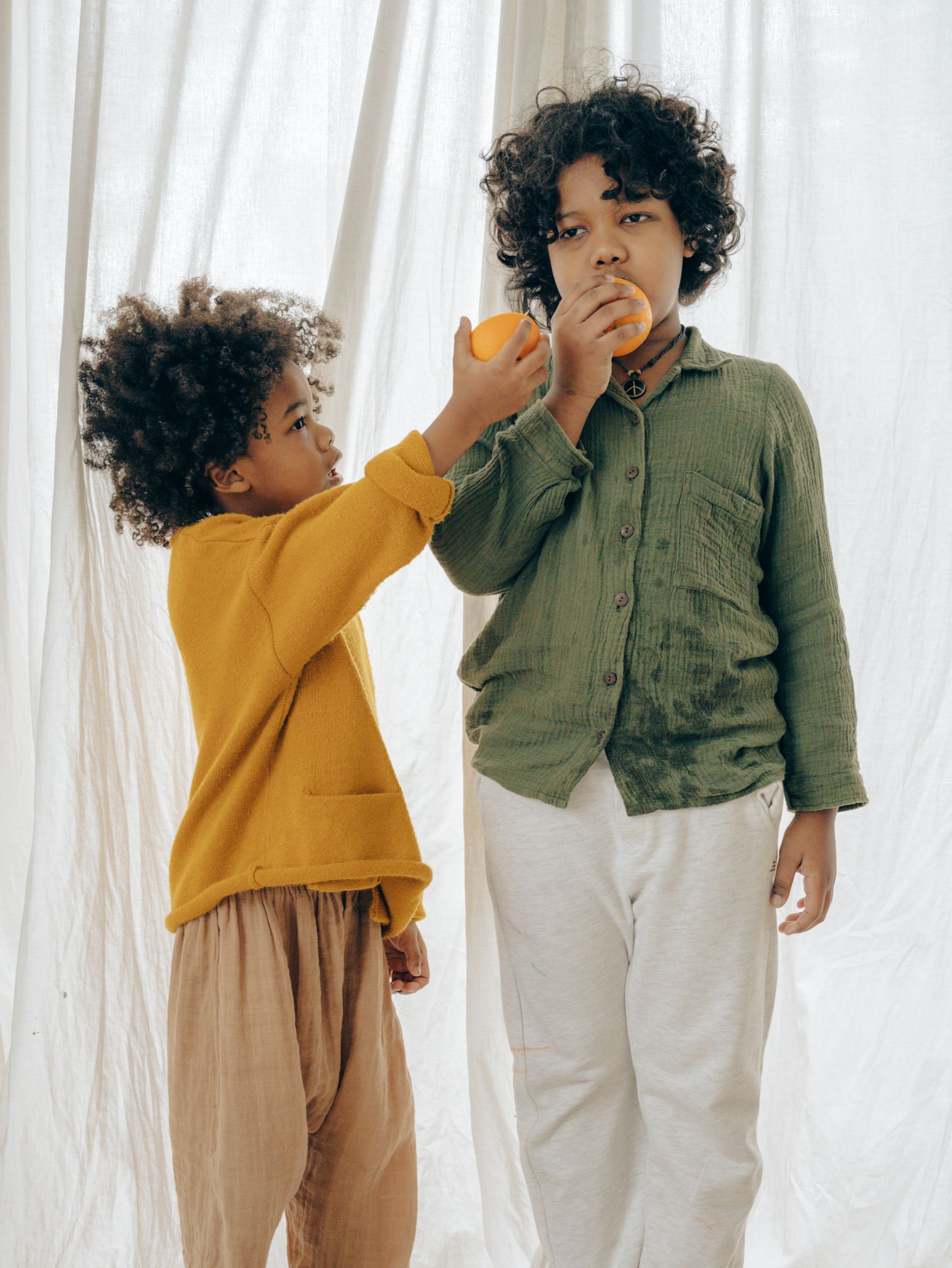
By Sonali Vongchusiri
When you think of your own childhood, what do you remember most? For me, I think about playing in the area behind my childhood home with my siblings. I remember make-believe games with my sisters, and my older brother rough-housing with us when he returned home from college. I also think about meeting my childhood best friend in first grade. I was sitting on the steps outside our school; it was her first day, and I told her I liked her dolly. I think about how we were too loud in the library as teenagers, and stayed up late on the phone “studying” but actually gossiping.
What I’ve noticed is we tend to think of friendships and sibling relationships as two separate tracks. But the truth is, they’re deeply connected.
For many kids, siblings are a space where they practice relationship skills that will last a lifetime. Even when the sibling bond is rocky, it can still offer rich, hands-on lessons in what it means to be a good friend. Let’s explore how sibling dynamics shape the way children approach friendships outside the family.
Sibling relationships lay the groundwork for balanced relationships
Playdates happen for a few hours. Even school-time is limited. And so children will often bend over backwards for their friends. They may say “yes” to things they don’t want to do, feel pressure to like a game just because their friend likes it, or struggle to tell their friends “no”.
But siblings—well, they’re around each other all the time, whether they like it or not. Which means that the pendulum swings the other way with siblings, and you may hear a lot of “no”s. The challenge is that often these “no”s are communicated harshly. You may hear: “That’s my shirt”, “Stop talking!”, “Don’t come into my room!” These are all “no”s and mean sibling relationships are naturally a great place to practice supporting your children to communicate “no” kindly.
This is important for friendships because the fear in saying “no” to friends for many children is that they’ll be thought of as mean, and that then their friends won’t want to be their friend anymore. Learning kind “no”s and practicing them in sibling relationships gifts your child the security to communicate healthy “no”s to their friends. And we definitely want that for them now, so that they’ve internalized it by the time they are teenagers.
Healthy relationships include both “yes” and “no”, and children need to be able to communicate these in ways that are supportive of their relationships.
To do this, teach your child to balance a boundary (“no”) with empathy. A key to communicating kind “no”s is to share what is a “yes”. Here are two examples:
- Instead of “That’s my car! Put it down!”, have your kids share what their sibling/friend can play with: “I’m not ready to share my car. Would you like to play with my truck or this ball?”
- Tell their sibling/friend when they can do the thing, so that the “no” now contains a “yes” for later. For example, my daughter’s friends sometimes want to play with her when she needs a moment of quiet at school. She can say: “Thank you for asking me. Right now I’m going to read and I’d really like to play during our next break.”
Conflict with siblings teaches repair—and that friendships can survive hard moments
One of the hardest things about friendship for kids is what to do when things go wrong. A friend says something mean. A game turns unfair. Someone stops inviting you to play.
Many children feel overwhelmed by conflict and don’t know how to respond. Some shut down. Others lash out. Or they may even abandon the friendship altogether. But kids who’ve experienced—and worked through—conflict with siblings often have an edge.
Why? Because they’ve learned that relationships can weather rough patches.
Ask any parent of more than one child—sibling fights are inevitable. But because they still live in the same house, they still sit across from each other at dinner, and the situation nudges them toward repair.
And this pattern of rupture and repair is incredibly important.
It teaches kids that a relationship doesn’t have to be perfect to be worth holding onto. That people can mess up and make it right. That apologies, forgiveness, and trying again are all important parts of any relationship.
These are the exact tools kids need to sustain deep, lasting friendships. Repair teaches kids not only how to connect but how to also reconnect.
One of my favorite tools to share with parents about repair is to move from forcing an apology to inviting repair—giving kids the chance to connect genuinely, rather than just saying words they don’t mean.
Support them first in realizing something has gone wrong with a friend/sibling and that neither they nor the other child wanted it to go that way. Then, a simple “Is there anything you’d like to do to make things right?” can go a long way.
Sibling interaction teaches kids that they impact each other
One of the most powerful things siblings learn from each other—often without anyone explicitly teaching it—is that what they decide to do affects someone else.
They see it in real time. One child knocks over a carefully built LEGO tower, and their sibling bursts into tears. A door slams in frustration, and suddenly everyone is on edge. A kind gesture—like sharing the last cookie—brings a smile.
These everyday moments of living closely with siblings help children begin to understand something foundational to all relationships: I affect you, and you affect me.
That awareness is the beginning of empathy. It’s the seed of emotional responsibility. This matters enormously for friendships.
Many kids struggle with empathy, not because they don’t care, but because they haven’t yet realized the impact they have on others. They might dominate play, interrupt frequently, or hurt feelings without understanding why their peers pull away. Kids with siblings grasp this concept intuitively, and we can support them in going even deeper and recognizing they can choose how they impact a room.
Here are a few ways we can slow things down and narrate the emotional impact:
- “Look at your brother’s face—when he showed you his drawing and you decided to pretend you were driving the car he drew, his eyes lit up!”
- “Did you see how your sister smiled when you helped her with that puzzle?”
- “You screamed because you needed quiet, and then your brother just yelled louder. Oof—that didn’t go as planned! How could you ask for what you need in a way that helps people listen?”
These reflections don’t need to be lectures. They can be 10-second nudges that help our kids connect the dots between their choices and someone else’s experience. Over time, this builds their ability to read the room, tune into others, and care about how their actions impact others.
And that’s not just useful at home. That’s the foundation of friendship.
Sibling differences teach kids that liking different things is okay
One of the hidden gifts of growing up with siblings is discovering that people you care about don’t have to be just like you.
Siblings often have different temperaments, interests, and rhythms. One might want to build LEGO towers while the other prefers imaginative play. One might love constant activity, while another thrives in quiet. These differences can be hard in the moment, yet they bring something important: the knowledge that you don’t have to match someone to love them.
This is an especially important lesson for friendships.
When kids are younger, they tend to bond over sameness: “You like unicorns? I like unicorns too!” As they get older, the pressure to conform can grow. Kids might feel like they have to like the same games, wear the same clothes, or act a certain way in order to stay connected. That’s how peer pressure creeps in. Children may worry that if they’re too different, they won’t be included. This comes down to their need to belong.
But when kids grow up alongside a sibling who’s different from them—and they’re supported in noticing and respecting those differences—they learn a deeper truth: you don’t need to be the same to belong. Fitting in and belonging are not the same.
They get early practice in holding onto their own preferences and personality while acknowledging the other child within a relationship—saying, “I don’t like that show, but I’ll sit with you while you watch,” or “You want to play dress-up, but I’m going to finish this puzzle first.”
This is the beginning of real relational confidence—being able to stay connected while also staying true to yourself.
Siblings also offer a safe, everyday place to practice this kind of boundary-honoring. If one child wants to wrestle and the other doesn’t, you can coach them both through naming what they like and listening to what the other prefers. Those micro-lessons slowly shape kids who can do the same with friends: respect differences without needing to change themselves or the other person.
The result? Kids who are better equipped to resist peer pressure—not because they don’t care what others think, but because they’ve had practice staying grounded in who they are, even in close relationships.
And that’s one of the greatest gifts of a sibling bond: the chance to be deeply connected, even when you’re not the same.
Sibling relationships form the foundation for friendships
Sibling relationships are a space where everything can exist—affection and frustration, closeness and conflict, sameness and difference. And because they unfold in the day-to-day moments of family life, they offer kids an unmatched opportunity to learn what it really means to be in a relationship with someone else.
These early bonds are not just background noise. They’re shaping how our kids show up in their friendships, how they honor boundaries—their own and others—handle hard moments, care for others, and stay true to themselves.
So the next time your kids are bickering over who gets the last blueberry muffin or navigating a sibling stand-off over the remote, take heart. These are the micro-moments where relational skills grow. With our solid, sturdy guidance and support, they’re building the foundation for healthy, connected friendships that can last a lifetime.
About the Author
Sonali is a parent coach, speaker, and founder of Forward Together Parenting. She’s been where you are with her own sensitive, strong-willed kids and has worked with thousands of parents worldwide. Her work is dedicated to sharing how you can confidently parent, have fun, and create lasting change that feels good.