
Using Art as Therapy: Art & OCD
By Anna (Anatta) Zarchi
I believe there is a powerful connection between art and mental health, whether for children, teenagers, or adults. New Counseling Service (NCS) recently curated an art exhibition with artist Amy Diener, who uses dot painting to cope with her OCD. The exhibition is part of a new social series called Canvas & Convos, where people gather once a month to talk about mental health and make meaningful connections. I interviewed Amy about how she uses art to manage her OCD and anxiety, what symptoms of OCD may look like, and other forms of treatment that are effective. So what is OCD, and how can art help with mental health? Keep reading to find out!
What is OCD?
Obsessive compulsive disorder (OCD) is a mental health condition in which a person experiences recurring obsessive fears, thoughts, and compulsive behaviors that interfere with their daily functioning. Symptoms often begin during adolescence or early adulthood, but can develop earlier. Obsessions are recurring intrusive thoughts, fears, impulses, or images that are unwanted or disturbing but that the person feels are outside their control. Compulsions are repetitive behaviors and thoughts that are developed in response to an obsession. They are something people often don’t want to do but feel are the only ways to neutralize their obsessions, or that something will go wrong if they don’t do them, resulting in what we call a vicious cycle.
Though OCD can manifest in many ways, Susanna Nicol, a trusted affiliate of NCS who specializes in emotional intelligence for kids, shares some of the most commonly found obsessions and compulsions in children:
- Constant worrying about cleanliness or germs, leading to repeated actions like constant handwashing.
- Fear of causing harm to others, such as thinking they might accidentally hurt someone even though it’s unlikely to happen.
- Imagining disturbing or scary images in their minds that they can’t get rid of.
- Believing that they need to follow certain specific routines, actions, or rules for good luck or for safety, even with no logical connection. For example: “I must turn the light on and off three times every night before bed so that nothing bad will happen while I sleep.”
- Needing things to be perfectly aligned or in a particular order, perhaps saying something doesn’t “feel right” if anything’s out of place.
Using art to manage OCD
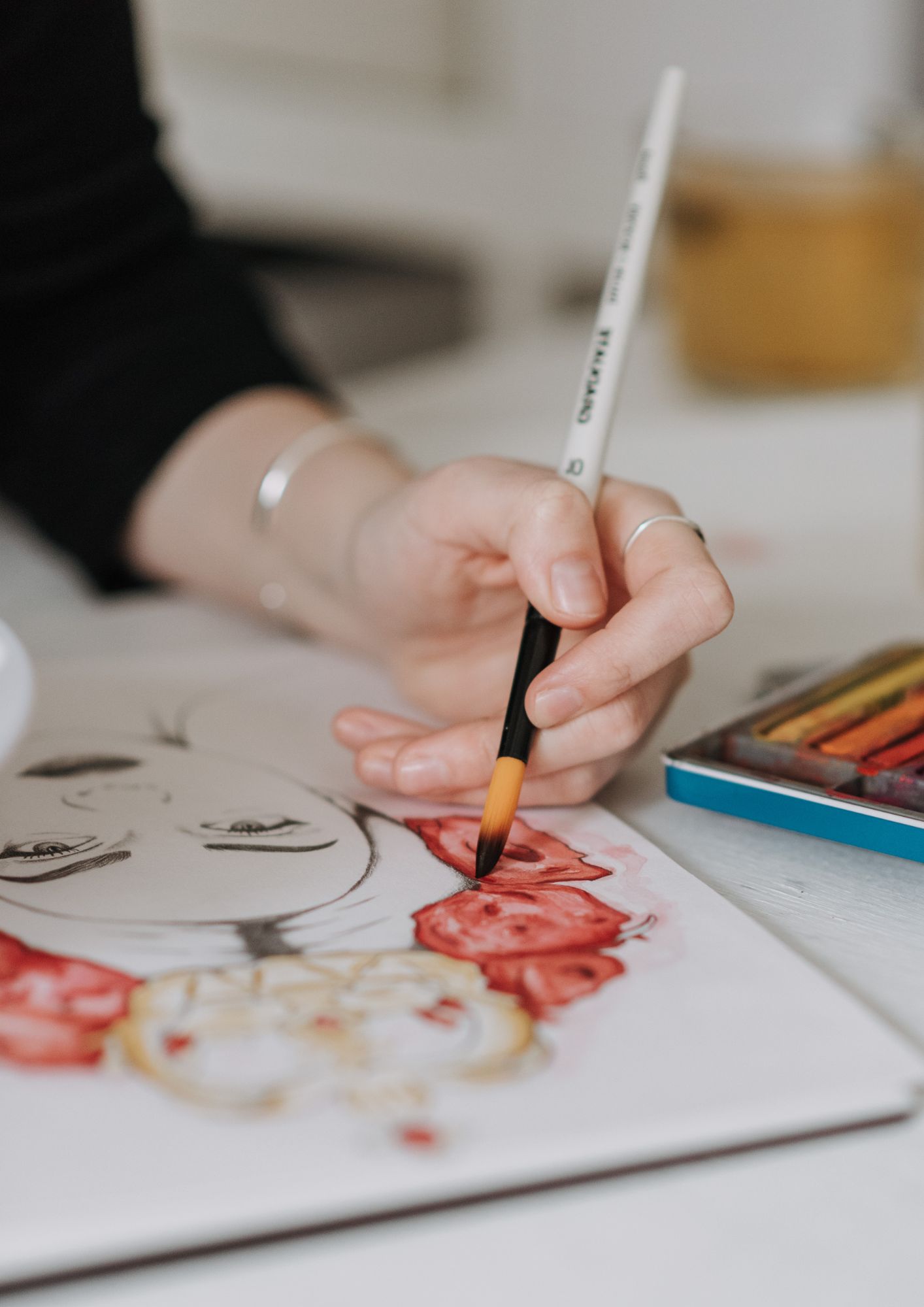
Art is a great way for people to express themselves when they aren’t able to find the words or feel uncomfortable expressing themselves verbally. Amy Diener told us she realized that art was therapeutic when she began dot painting: “The repetitive, meditative process of creating each dot helps me feel grounded, and it gives me a sense of control and mindfulness. By focusing on the details and colors, my mind feels at ease and the obsessive thoughts quieten down. It’s like I can channel the anxious energy into something productive and beautiful, rather than letting it overwhelm me.”
Susanna from EQ for Kidz added, “For kids with OCD or anxiety, creating art is particularly powerful as it offers a safe space to let go of worries. Art has the magical ability to make the abstract experience of emotion tangible and, therefore, manageable. When kids create with their hands, they are focused on something positive, taking their minds off the stress in their body or repetitive thoughts. Drawing, painting, or any other creative activity supports kids to work through their feelings in a calm and controlled way (it’s important for kids to feel ‘in control’), which helps them feel more at ease and less overwhelmed. It can also help the adults around them understand how they feel and start a dialogue based on their artwork.”
It’s important to remember that in this context, art does not have to be “good”. There should be no judgment of the artwork in any way. Fear of judgment and thinking that art has to be “pretty” can deter children from wanting to create art as a form of self-expression or as a coping mechanism. Additionally, it’s also important to know that art can help with other mental health conditions, and that there is no set formula—Amy tells us that dots suddenly started emerging in her work around 2016, and even though she wasn’t sure why, it worked for her and she went with it. Different types of art work for different types of people!
What to do if you think your child might have OCD
Knowing what to do next can be difficult if you suspect that your child has OCD. “It’s important not to panic but to take their concerns seriously. Start by talking to them in a gentle and accepting, curious and open way, allowing them to share what they’ve been feeling or experiencing,” Susanna recommends. Once you’ve talked to them, we strongly recommend seeing a professional who specializes in OCD, as a specialist will be the most equipped to perform an assessment and offer specialized treatment. “Getting a professional diagnosis early on can make a big difference. It’s important to be supportive and patient, offering understanding without judgment,” Amy told us. She also added that for kids and teens who suspect that they might have OCD, opening up to a trusted adult is essential. She says, “OCD can feel incredibly isolating, but you don’t have to face it alone—there is help and treatment out there. I’d also advise parents and those close to the child not to offer reassurance, as this can reinforce the OCD behaviors. It’s best to leave that part to a professional.”
Other types of treatment
Cognitive behavioral therapy (CBT) and exposure and response prevention (ERP), a specialized form of CBT, are often used to treat OCD. Susanna explains that ERP gently guides children in facing their fears one step at a time without falling back on compulsive behaviors. She also adds that helping children with OCD learn how to identify and regulate their emotions can be especially helpful, as this can help them develop healthier coping mechanisms. NCS counselor Savinee, who specializes in working with children, also recommends sandtray therapy for children with OCD. She explains that sandtray therapy “provides a safe space for children to express and process their unsettling thoughts, helping to alleviate the distress associated with OCD. By using tangible figurines and sand, children can externalize their difficult emotions and negative thoughts, facilitating a deeper understanding and resolution of their experiences.”
In some cases, medication may also be prescribed. However, it is important to note that medication is a tool that helps people manage their symptoms, but it will not completely eliminate them. “Medication wasn’t a cure, but it gave me enough mental space to engage more fully in therapy,” Amy explains. “Combining therapy, medication, and mindfulness practices—especially through my art—has created a powerful approach that allows me to manage my OCD in a healthy way.” There are various approaches that can be taken, and ultimately we recommend finding what works best for your child.
If you think you or your child might have OCD, or if you are currently caring for someone with OCD and need support, please do not hesitate to reach out to NCS or to any other resources available. Some other places in Bangkok that treat OCD are Bangkok Mental Health Hospital, Samitivej Hospital, Bangkok Hospital, and more. We encourage you to do your own research to find the place that is most suitable for your needs. As Amy said, you do not have to face this alone.
Books to read
Books on caring for children with OCD and more, as recommended by our clinical director:
- “OCD in Children & Adolescents: A Cognitive-Behavioral Treatment Manual” by John S. March & Karen Mulle Friesen
- “The Hurried Child” by David Elkind
- “The Everything Parent’s Guide to the Defiant Child: Reassuring advice to help your child manage explosive emotions and gain self-control” by Jesse Jayne Rutherford
- “The Overscheduled Child: Avoiding the Hyper-Parenting Trap” by Alvin Rosenfeld & Nicole Wise
- “Parenting with Love and Logic” by Foster Cline & Jim Fay
Other books on caring for children with OCD:
- “Helping Your Child with OCD: A Workbook for Parents of Children With Obsessive-Compulsive Disorder” by Lee Fitzgibbons & Cherlene Pedrick RN
- “Understanding OCD: A Guide for Parents and Professionals” by Adam Lewin & Eric Storch
- “Breaking Free of Child Anxiety and OCD: A Scientifically Proven Program for Parents” by Eli R. Lebowitz
About the Author
Anna works for New Counseling Service (NCS), the first and only licensed mental health center in the heart of Bangkok. NCS has provided counseling services in Thailand and surrounding regions for over 20 years, with therapists specializing in a wide variety of issues such as anxiety, depression, work stress, relationships, and more.
Contact: info@ncsbkk.com; Phone: +66-2-114-7556; ncsbkk.com; FB/IG: @ncsbkk.