
Simple Ways To Play And Connect Together
By Laura Devos
Look around in a café or on the beach, and you’ll see families glued to their devices. Parents on their phones, children on their iPads, and often only the grandparents (but not always!) are perhaps enjoying the view or having a chat. Yes, of course we might need to tend to a work email, or our child may be having their permitted screen time for the week, but one of the real issues of “each to their own screen” is the socialization we miss out on.
Humans are social beings. We learn, socialize, and empathize through social interactions: it is part of our fundamental neural wiring. Socializing involves working together, playing together, and even simple body language and communication patterns including eye contact. As parents, it’s not only in our best interest, but also our duty as guides to support our children’s socialization, starting in the home.
Why play matters
Play is not only an amazing way to connect with our children, but it’s also a proven way to learn, including new information and soft skills such as coordination, patience, and teamwork. As Dr. Karyn Purvis said, “Scientists have discovered that it takes approximately 400 repetitions to create a new synapse in the brain, unless it is done in play, in which case it only takes 10 to 20 repetitions.” So, if you’re trying to teach your child about teamwork and collaboration, put the encyclopedia away, because it’s all about practice. And practice happens through play.
Let them lead
Play England defines play as “what children and young people do when they follow their own ideas and interests, in their own way, and for their own reasons.” Talk about taking off the pressure: play really is quite simple and yet so impactful. To make playing with your children easier, allow them to guide the way. Practice being present. Put all devices away—out of reach and even out of sight. Sit back and relax. Ask your child what they would like to play and wait patiently while they think it over. They’ll probably be overjoyed at your availability and presence. When your child decides, go with it and let them call the shots, as long as it’s safe and within your family’s boundaries. By doing this, you’re modeling collaboration. Bonus: our children don’t always get to lead on the playground or at school. So when you model that it’s okay to also follow, and that following is just as fun, then this is a lesson they can take with them.
Activities to play together
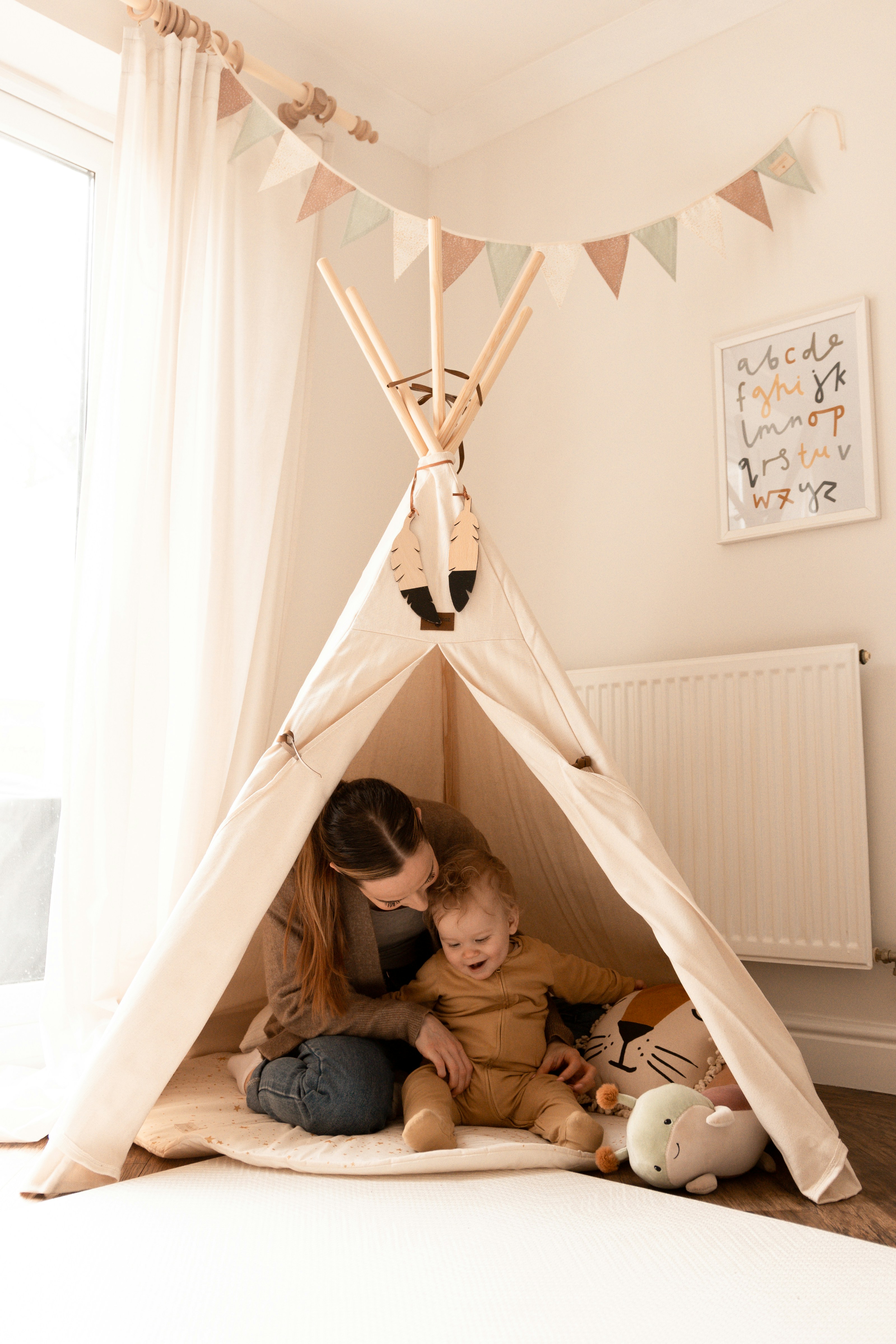
One fun, easy, and free activity is building forts in the house. This is a great way to build gross motor skills, strengthen collaboration, and practice trial and error. Will the pillow stay? Will the sheet balance? It is also a great way to pass time when it’s pouring with rain or the air quality is bad and you’re stuck playing indoors. For building a fort, you can use pillows, chairs, sheets, and blankets to create all sorts of structures. Let your child lead. Try to stay quiet and listen for directions such as “pass me that pillow, Dad,” or, “move that chair here, Mom.” Offer tips to show your engagement, “How about we add a window here for kitty to come through?!” but provide them sparingly so you don’t take over as lead architect of the fort.
Board games and card games are also fun ways to sit closely together and enjoy an activity. UNO is an easy-to-find, fun, and simple card game loved by all. For children aged eight and above, The Game of Life is an excellent board game for discussing life decisions, looking at the bigger picture, and learning about the impact of choices and also of circumstances. As these games have winners and losers, they provide a great opportunity to practice our resilience. Lots of children don’t like to lose, especially from age four to seven, and that’s okay. They can have their emotions and try again. You can talk about how you used to be frustrated when you lost games at their age too. Try not to always let them win, otherwise this can backfire when it comes to building confidence.
Puzzles are great for all ages, but you will want to make sure the size of puzzle you choose is age-appropriate so your child isn’t left frustrated when they can’t finish the 1,000-piece puzzle in one sitting. Younger children may want to finish quickly, so it’s better to choose a very small one for toddlers and a 60- to 100-piece puzzle for small children. We want to teach patience, but we also want to enjoy the moment of connection with our child. Ultimately, we all learn patience while puzzling!
Remember, as parents we have so much to teach our children, whether it’s soft skills, stories to pass on, or lessons to share. Doing this through play not only makes it easier for our children to learn, but also builds our connection and attachment with our children. So, make space for creativity, embrace the fun, and block out time in your calendar for play!
About the Author
Laura Devos is a certified parent educator, mama of three, and founder of Extra Roots Transformational Courses & Coaching. She works with a wide array of families and specializes in supporting families with transitions abroad and third-culture kids. Learn more at extraroots.com or contact her at laura@extraroots.com. For more insight and tips, follow her on IG @extraroots_global.