
Sibling Rivalry
By Natasha Duffin-Jones
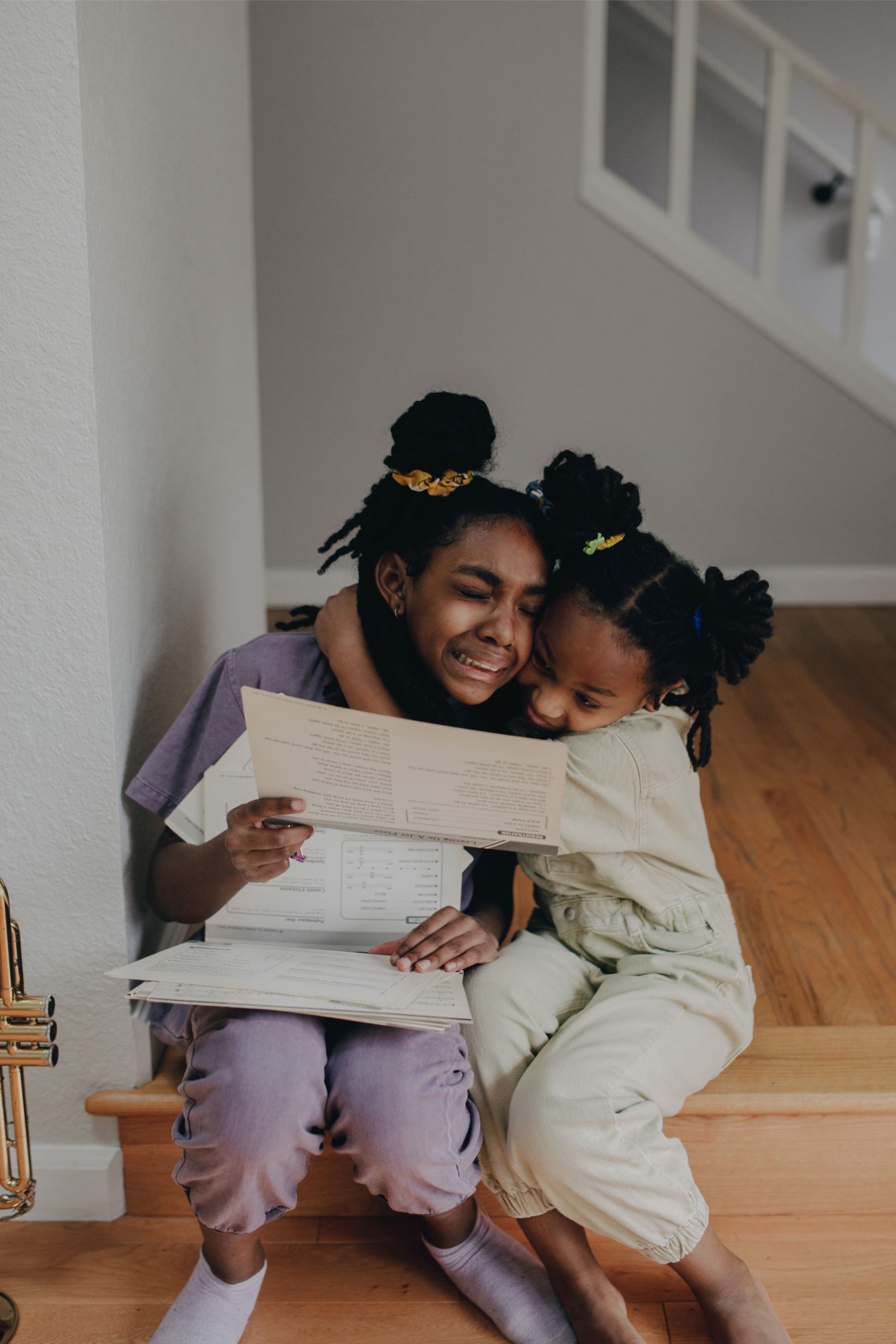
My husband and I were always set on having two children. We both have siblings and value our relationships with them immensely, so when we began discussing starting a family, we knew we wanted that for our own children. I adore my brother and we’re very close now, even across the continents, but it wasn’t always like this. When we were growing up, we fought a lot over absolutely everything.
Just as we’d hoped, my husband and I had two of our own children, who are just 22 months apart. We (somehow!) made it through the baby and toddler stages and finally, they were old enough to play together. I was delighted—until the fighting started!
My children are still very young, so I want to give them the best start at developing a positive and productive relationship with one another. When they play together happily, it’s the most wonderful thing I’ve ever witnessed and brings me unparalleled joy. However, when they hurt each other, it brings out a rage I didn’t realize I could ever feel towards them!
Currently, the parts of the day they spend playing nicely together are unfortunately not that long—it feels as if they’re always wrestling, wanting the same toy, screaming at each other, or fighting for my attention. So I started wondering about how to promote positive sibling relationships.
In childhood, children spend even more time with their siblings than with their parents. As expats, we live far away from our extended family; therefore, having healthy relationships within our close family unit becomes even more vital. In fact, sibling relationships help develop life skills.
The many positive benefits of sibling relationships include building empathy and emotional development, enhancing social skills, and creating a lifelong support system. Furthermore, siblings play a key role in the development of children’s minds, particularly their beliefs, emotional development, and self-belief. Unlike other relationships, they are a constant, and the one relationship that they cannot simply walk away from—unlike friendships. Therefore, children have to develop strategies and techniques to navigate them.
Conflict between siblings is actually healthy. Allowing siblings time and space to resolve their conflicts without parents interfering is good for their long-term development, giving them skills to resolve conflicts with their friends. One method some parents use is to take a “sportscaster” approach to narrate their disagreements without getting involved, enabling children to resolve their own disagreements. I find this particularly difficult as I want to solve problems for them, but I know I need to sit back and support them in solving some disputes for themselves.
Four strategies to support positive sibling bonds
Avoid favoritism and comparisons: No favoritism or direct comparisons of siblings from parents or extended family is essential. Findings demonstrate that up to 85% of siblings believed that their parents had a favorite child (1). This perceived favoritism is the largest area of sibling conflict as children often feel they are being treated differently from their siblings. Fairness is hugely important to children, so it's vital not to compare them. If different rules are needed based on their ages, for example, then it helps to explain the reasons behind the difference and promote fairness over perceived equality. Additionally, when one child achieves something, it’s important to celebrate children’s individual achievements as a family so everyone feels involved.
Foster a team mentality: Rather than pitting siblings against each other, for example, “Who can tidy up the toys the fastest?’, create a team for the siblings so they have to work together. This reduces tension between them, creating a more harmonious life for everyone. Other ways parents can help to create a team environment is through shared activities including family dinners, joint projects, and planned shared outings. These kinds of activities help to create a bond between siblings.
Praise positive interactions: It’s easy to turn to constant negative reinforcement of unwanted behavior, particularly if you have siblings who are constantly bickering. However, one of the simplest ways to support sibling relationships is to praise their positive interactions with each other. This might mean occasionally purposefully ignoring negative interactions and trying to focus on positive interactions only. Ways to do this are by praising turn-taking and complimenting children on following the family rules. This can really help in developing a positive mindset. Parents can praise siblings when they problem-solve independently or figure out a game together; then hopefully children will turn to positive interactions more and more.
Teach and model conflict resolution: It’s important parents take the time to teach children how to resolve conflicts, solve problems, take turns, and negotiate. Make sure there are clear boundaries and consequences, then use positive reinforcement when children observe the boundaries. Also ensuring that adults take the time to validate children’s feelings, and teaching them how to articulate their feelings so they can express themselves in difficult moments, helps to aid conflict resolution.
My research has helped me find some areas to work on with my family. One change working for us at the moment is giving the children some one-on-one time with each parent. Now, this is obviously dependent on life and work schedules. How it works for our family is my husband and I mostly split who cares for each child on a Saturday morning. This gives each of us some special one-on-one time with each of our children and time to form a relationship with them outside of the family unit, and it’s also a break for the children from each other, which is really positive. They are excited to see one another after time apart, and their play is much more collaborative—at least for a short time!
While I’m committed to implementing these strategies, I also remind myself that sibling conflict is both normal and healthy. It will never disappear completely—and that’s OK. But if you do discover a magic formula to end sibling rivalry forever, please let me know!
About the Author
Natasha Duffin-Jones is a mother of two and an Early Years and Primary Teacher with a Masters Degree in Early Childhood. She is a Children’s Yoga Teacher with her company, Story Time Yoga specialising in teaching yoga with children’s stories developing literacy and emotional literacy. She likes visiting different places in Bangkok with her children and documenting their adventures on her Instagram page @bangkokmamayogi
References
- Suitor, J. et al. (2009) The Role of Perceived Maternal Favoritism in Sibling Relations in Midlife, Journal of Marriage and Family, 71(4):1026–1038. onlinelibrary.wiley.com/doi/10.1111/j.1741-3737.2009.00650.x
Further Reading
- Howe, N., Recchia, H & Kinsley, C. (2023) Sibling Relations and Their Impact on Children’s Development, Encyclopedia on Early Childhood Development. child-encyclopedia.com/peer-relations/according-experts/sibling-relations-and-their-impact-childrens-development
- Mastermind Behavior (2025) How to Encourage Positive Sibling Relationships. mastermindbehavior.com/post/how-to-encourage-positive-sibling-relationships
- McHale, SM., Updegraff, K & Whiteman, S. (2024) Sibling Relationships and Influences in Childhood and Adolescence, Journal of Marriage and Family, 74(5):913–930. pmc.ncbi.nlm.nih.gov/articles/PMC3956653/
- Nivison, M & Madigan, S. (August 8 2024) How Parents Can Promote Positive Sibling Relationships, The Conversation. theconversation.com/how-parents-can-promote-positive-sibling-relationships-235401
- Sheldon-Dean, H. (2025) How to Help Siblings Get Along, Child Mind Institute. childmind.org/article/how-to-help-siblings-get-along/
- University of New Hampshire (2024) Promoting Positive Sibling Relationships: Practical Tips for Caregivers. unh.edu/saara/publication/promoting-positive-sibling-relationships-practical-tips-caregivers