
The Psychology of Making
By Anatta (Anna) Zarchi
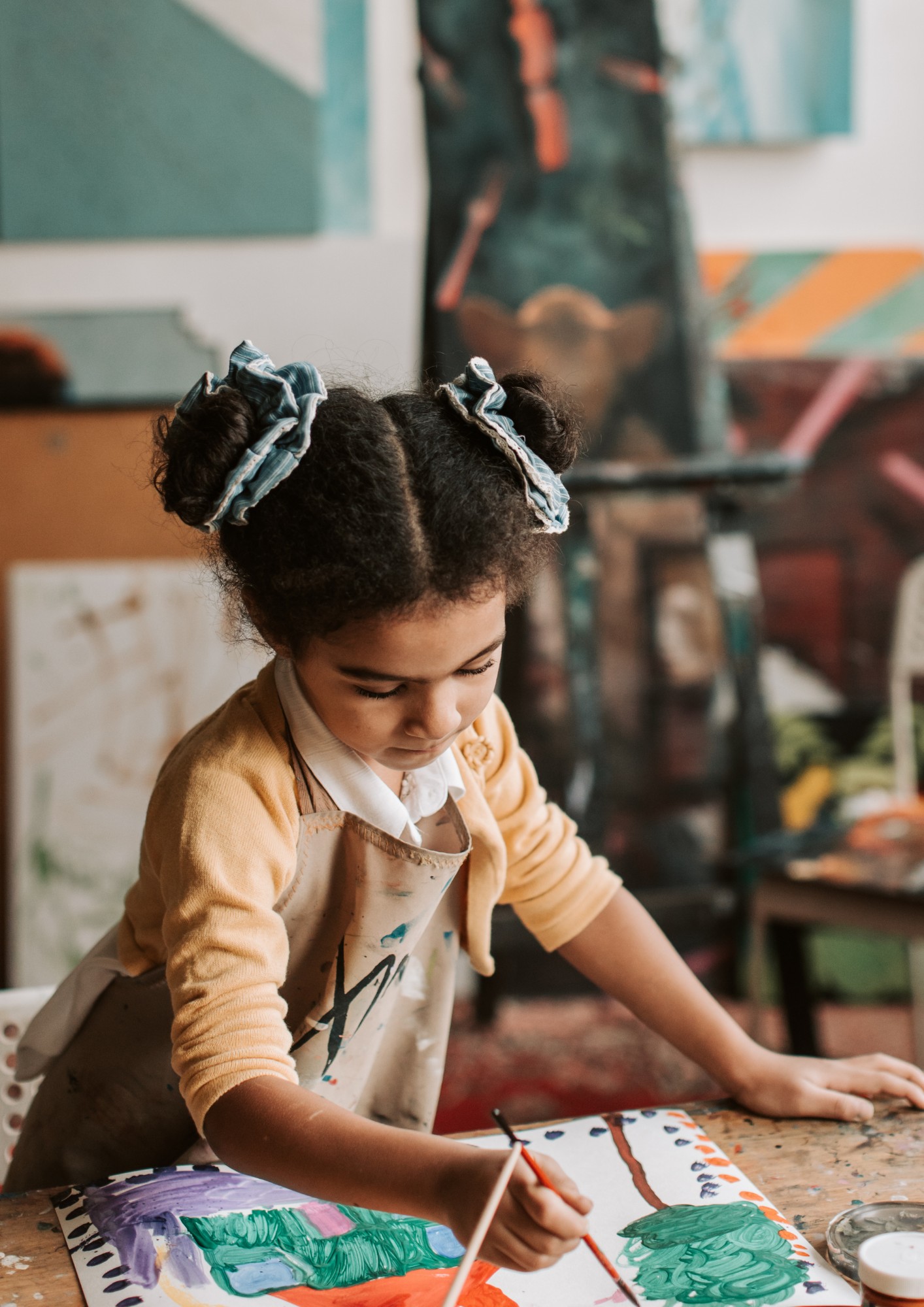
As the mainstream education system focuses more and more on academics, and technology becomes the main source of entertainment, we hear many stories about how young children no longer get to use their hands creatively. Though an iPad is convenient and academics is important, plenty of research shows that hands-on creativity is highly beneficial for children’s development and mental health.
What counts as hands-on creativity?
First, let’s define “hands-on creativity”. New Counseling Service (NCS) Counselor Pam explains, “Hands-on creativity means any activity where children get to use either their small or big muscle groups while doing something creative. Creativity isn’t just limited to handicrafts and art: it can be playing with toys; creating imaginary scenarios; finding creative solutions; or even using your imagination while doing other activities, including chores.” She shares that her daughter loved cleaning the floor while pretending to be Cinderella, which is both hands-on and creative, with the added benefit of learning to help out. So how do these activities help lower stress and increase confidence?
How creating things calms the brain
Stress in children often shows up as the body goes into high alert mode. Cortisol levels rise, and the mind gets stuck in a loop of worry or overstimulation. NCS Affiliate Counselor Sami shares that hands-on creative activities can interrupt that loop: “When a child is absorbed in drawing or building something, they step out of the self-monitoring part of the brain and into flow, a state that requires focused attention on a clear, achievable goal. When actions become predictable, such as stringing beads or kneading dough, that repetitive movement has a calming effect on the autonomic nervous system. Studies using brain imaging have found that art-making reduces activity in the amygdala, the brain's alarm system, while activating reward and pleasure pathways.”
Additionally, activities such as drawing, painting, or building allow kids to express emotions that they may not yet have the vocabulary to communicate. In this way, these activities serve as a nonverbal method of emotional release and self-expression. Counselor Pam elaborates, “Using their hands to express something externally is like being able to physically push out pent-up or heavy emotions from their minds.”
From mistake to masterpiece
In addition to reducing stress, hands-on creative activities can also boost children’s confidence by creating a sense of agency and accomplishment. Counselor Sami explains, “A finished drawing or a completed craft is tangible evidence a child can point to and say ‘I made that!’ It offers ownership and autonomy, while normalizing making mistakes and adjusting.” She shared the following example: “I once had a student who accidentally painted the grass pink in a workshop and panicked, convinced she'd ruined it. I asked her to give the painting a title before she decided it was ruined. She thought for a second and said ‘Candy Planet’. Once it had a name, it stopped being a mistake and became a concept. That moment is a good example of what this kind of confidence-building actually looks like in practice. It's not about the finished piece being technically correct; it's about a child discovering in real time that a mistake doesn't have to derail them.”
When it matters most
The biggest gains from hands-on creativity tend to show up between the ages of 6 and 12, when both stress regulation skills and core confidence are actively forming and are highly responsive to this kind of input. Nevertheless, such activities can still have healthy benefits for children (and adults) of all ages, though different activities can be more meaningful for different age groups. Younger children tend to get more out of easier sensory-based activities as they are just learning to use their motor skills. On the other hand, older children may feel a higher sense of accomplishment from more complex activities.
Ideas to get started
Here are some creative hands-on activities that can be great for young children:
- Making your own playdough
- Doing Origami
- Planting seeds or gardening
- Making a nature mandala
- Drawing in the sand
- Painting or drawing
- Clay modeling
- Stitching, knitting, crocheting or sewing
- Making a shaker by filling a container with rice or beans and decorating the outside
- Making an edible collage from fruit, cereal, or crackers before eating it
- Raising pets with the help of parents
- Taking drama classes
When creativity feels like pressure
But what about children who dislike these activities? Sometimes children associate hands-on creativity more with pressure than relaxation, especially if they've had experiences where their work was compared or corrected (as was my experience). But art isn’t objective; the point isn’t to make something that is deemed nice by other people, but to experiment and express emotions and ideas through your body. Once you learn to let yourself use your hands and be creative without judgment, art can go from being a stressor to a de-stressor.
Counselor Sami thinks, “A lot of this comes down to a learned idea that art has to be aesthetically pleasing to count, and that you need that outcome to justify doing it in the first place,” and that, “For people who find crafts stressful, hands-on creativity is often even more valuable once that pressure is removed, because the skill they're actually practicing isn't artistic ability; it's tolerating imperfection and staying engaged with something outside their comfort zone.”
Exercising creativity by ignoring perfection
When I changed from a mainstream school to a Steiner school, which puts heavy focus on hands-on arts and crafts, I initially found hands-on activities stressful. I was surrounded by kids who could easily have had their art displayed in a gallery. At the time, I felt like being around them knocked down my confidence more than it built it. Though many of my friends were skilled, that wasn’t actually the point of the curriculum. The teachers weren’t trying to create artists, they were teaching us to exercise our creativity through our hands because they believed it was good for our development. Once I was able to overcome this mental block (which took time), art became relaxing for me, and even if my work was far from being conventionally nice, I found that I no longer cared. If I had fun or felt relaxed making it, that was all that mattered. I also found that this change gave me the confidence to try all kinds of new things without shrinking away as I used to, just as Sami described.
Steiner education follows a simple principle on children’s development that I think fits perfectly into this conversation: hand (willing), head (thinking), heart (feeling). Hands are the most important in early childhood, followed by heart in late elementary and middle school, and head in high school. In life, most things will involve some combination of the three, and having the opportunity to exercise each at an age when they will benefit from it the most can help children build the confidence and emotional regulation skills that empower them for years to come.
About the Author
Anna works for New Counseling Service (NCS), an internationally recognized mental health center in Bangkok with a diverse team of licensed counselors. NCS has provided counseling services in Thailand and surrounding regions for over 20 years, with therapists specializing in a wide variety of issues such as anxiety, depression, work stress, relationships, and more. For more information, visit ncsbkk.com/ncs/