
Mini Garden Magic
By Kelly Patten
I’ve recently heard the joke that middle-aged millennials (hello 40!) all take up one of a few hobbies: baking sourdough from scratch; birdwatching; or gardening. I’m a terrible baker, and I’m not sure the pigeons that try to encroach on my balcony really count, so that leaves me firmly in the plant mom camp.
When I was growing up, my mother was an avid gardener. Lush flower beds filled our yard, and a large garden plot flourished throughout the summer producing endless juicy tomatoes and crisp cucumbers. These days, she’s taken to more exotic plants and enjoys cultivating weird varieties of orchids and bromeliads. While I may not have her green thumb (yet), her love of plants, flowers, and gardening has passed down to me, and so in turn, I’m trying to pass it on to my daughters.
On a recent visit to Bangkok, my mother set about teaching me all there is to know about raising my hibiscus plant. Lots of sunshine, keep it well hydrated, and was I really going to keep it in that dreadful pot? Solid advice for plants and humans alike. What else could my daughters learn from our balcony garden? Indigenous author and botanist Robin Wall Kimmerer writes about gratitude and reciprocity in the natural world in her book “The Serviceberry”. She theorizes that society would be better served by abandoning economic models of scarcity and competition in favor of a gift economy, in which sharing abundance is the norm. Flowers and plants and fruit are meant to be shared among friends and neighbors.
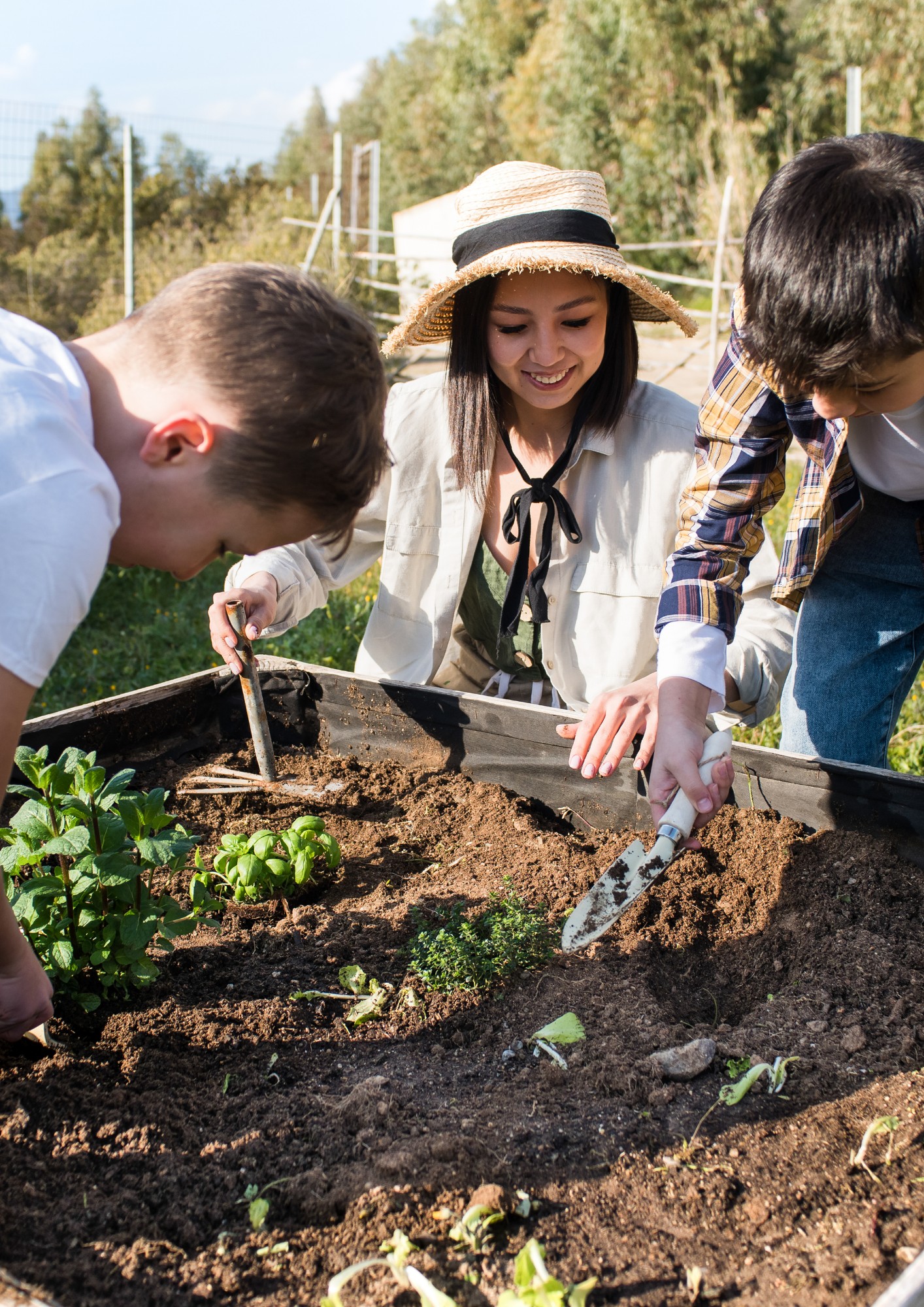
And while I don’t have bushes overflowing with ripe, juicy berries to share with friends and neighbors, I can still try to instill Kimmerer’s ideas of gratitude within the natural world. I’ve come to find pleasure in caring for our plants, and my girls also love to help water them. Our plants give us small gifts—watching a new leaf slowly unfurl fills me with joy when seen through my daughters’ eyes. We reciprocate by pulling away dead leaves (my two-year-old takes to this a bit too enthusiastically), adjusting their sunlight, and in the words of my five-year-old, “keeping them near their friends.”
Without fail, after the summer holidays, we return to Bangkok lamenting the lack of green spaces that felt abundant back home. Bangkok feels like a concrete jungle, overflowing with condos and motorbikes rather than community gardens and green play spaces.
A recent walk down our fairly quiet, nondescript soi reminded me of how gratitude leads to abundance. Do I wish we had a sustainable, well-designed green playground on our street? Of course, who wouldn’t? But that mindset leads to the commoditization of daily life and a nagging feeling of insufficiency. I shifted my focus away from what’s lacking, and instead looked at the blooming trees and wandering vines that line our street.
A whole plot of banana trees? Check. Heavy purple bougainvillea dripping over a long line of fiery red ixora? Check. The sticky, sweet scent of white jasmine? Check.
Getting out of my own head and taking a moment to appreciate natural beauty in all its forms requires patience with myself and my city. A slowed down reminder that, as Kimmerer writes, “all flourishing is mutual.”
About the Author
Kelly is mom to Freya and Daisy and recently went back to work as an early years teacher. She previously worked as a primary educator and literacy specialist. Kelly loves reading fiction, listening to true crime podcasts, and watching Disney princess movies.