
Living with Allergies
By Chrissy O’Brien
At eight months old, my son was rushed to hospital struggling to breathe. It was an emergency and I had no idea what was happening.
The diagnosis was anaphylaxis as a result of cow’s milk protein allergy (CMPA). Allergies don’t run in our family so I knew nothing about them and had no idea how to navigate this situation, especially with a child whose diet was still largely composed of milk.
Over the following two years, I learned more about allergies, how to keep my son safe, and how to support others in their understanding. I also discovered that factors like C-section birth, early administration of antibiotics, and formula supplementation in hospital—all common in Bangkok—can contribute to the development of allergies.
How prevalent are allergies?
The World Allergy Organization (WAO) estimates that between 10% and 40% of each country’s population has allergies (2). Allergies can develop at any age but more frequently develop before the age of five. They are also more prevalent in children and it is quite common to find several children in each class with allergies.
Studies show that the prevalence of allergies is increasing in both developed and developing economies (1, 4). Additionally, my son’s pediatric allergist has a huge waiting list, which suggests allergies are becoming more prevalent here in Thailand too.
What are the most common food allergens?
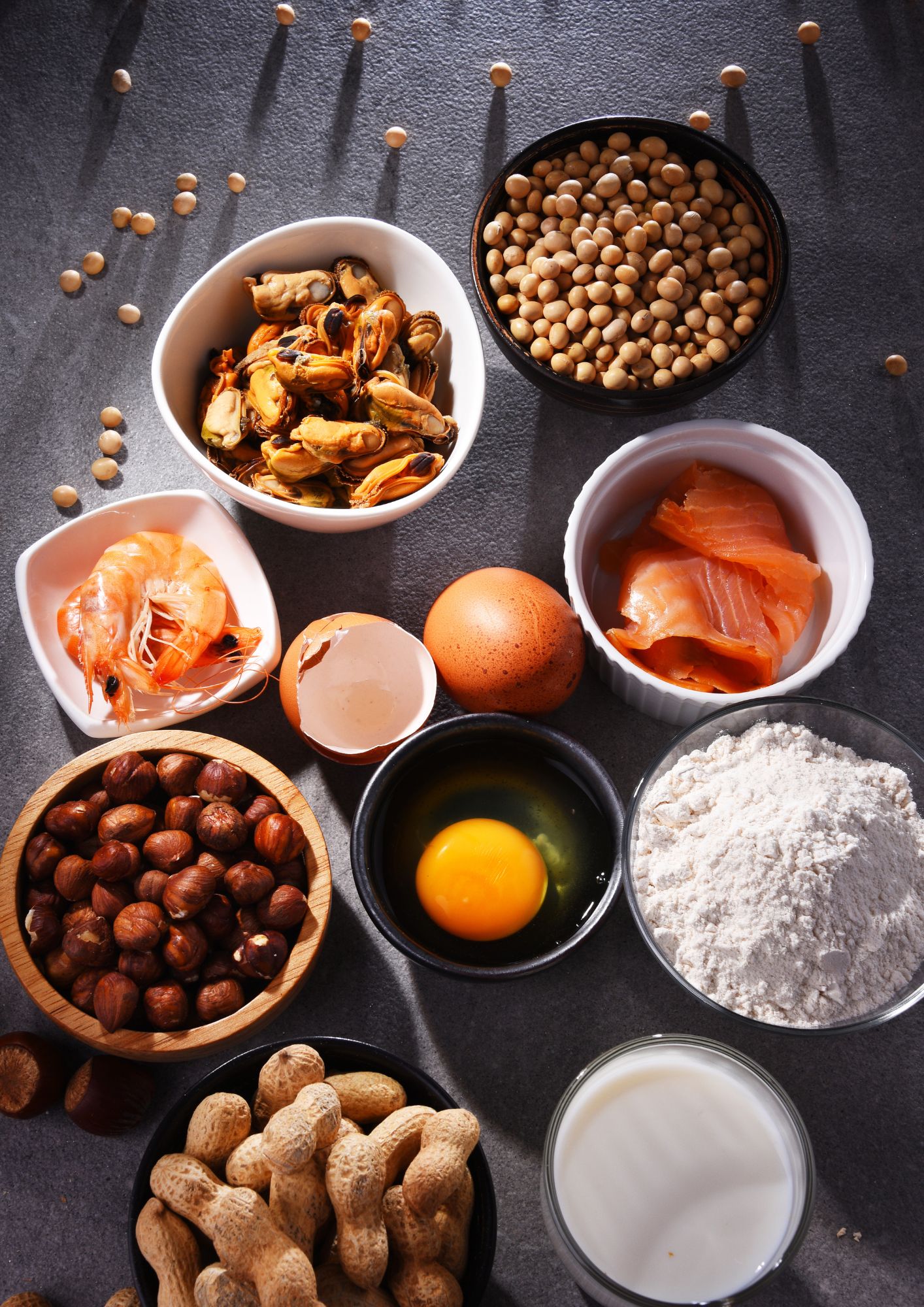
The “Big 8” allergens are:
Milk
Eggs
Fish
Crustaceans
Tree nuts
Peanuts
Wheat
Soy
While allergic reactions can be mild in some people, for others they can be severe or even fatal.
What is anaphylaxis?
Anaphylaxis (pronounced anna-fill-axis) is a serious whole-body, life-threatening allergic reaction. It can occur when someone is exposed to something they are allergic to (an allergen) and is a medical emergency (3). Many people wrongly believe severe or fatal reactions only occur with peanut allergies; however, these fatal reactions can be to any allergen, most commonly milk (1).
Daily life with allergies
Navigating my son’s allergy has been a journey and we are beginning to learn how allergies present unexpected challenges. From facing difficulties starting school to having to, carefully, ask the right questions about ingredients in play materials or snack time arrangements. We continue to attend playgroups and are grateful to those that are allergy-aware.
We cook all of our son’s food at home, so we can be sure it contains no milk products. Menus in many countries have allergy labels, but that’s rare in Thailand. Traveling can present challenges, so it's a must tp stay somewhere with cooking facilities and always have a supply of safe foods.
We’re grateful to have oral immunotherapy—a type of allergy treatment—here in Bangkok, and know that back in the UK we’d be on a more than year-long wait list.
I worry about what school will be like for him. As a teacher, I've sadly encountered children being bullied because of their allergies. Research suggests that a third of children with allergies get bullied (5), including having the potentially deadly allergen waved in their face. As a parent, this petrifies me.
Schools desperately need more allergy education, both for the children and the teachers, to support schools to be more inclusive. The more we learn, the safer our little ones with allergies will be.
How to be inclusive and celebrate safely at school
Send non-food items. Creative crafts, playful accessories, celebration props. These are not only allergen-free but also avoid the sugar overload that often happens with school celebrations.
Check with the class teacher about what allergens need to be avoided.
Avoid anything containing the Big 8 allergens—there are Bangkok-based shops that specialize in allergen-free chocolate and treats.
If you must send something with an allergen, ensure it is labeled.
Teach your child to avoid sharing food and about respecting allergies.
References
- Baseggio Conrado, A., Ierodiakonou, D., Gowland, MH. et al. (2021) Food anaphylaxis in the United Kingdom: analysis of national data, 1998-2018. BMJ 2021; 372:n251 bmj.com/content/372/bmj.n251
- Allergy UK (2025) Allergy Prevalence: Useful facts and figures. allergyuk.org/about-allergy/statistics-and-figures/
- Anaphylaxis UK (2023) About Anaphylaxis. anaphylaxis.org.uk/about-anaphylaxis/
- Prescott, SL., Pawankar, R., Allen, KJ. et al. (2013) A global survey of changing patterns of food allergy burden in children. World Allergy Organ J 6, 1–12. link.springer.com/article/10.1186/1939-4551-6-21
- Science Daily (October 5, 2021) One in three kids with food allergies say they’ve been bullied because of their condition, Children's National Hospital. sciencedaily.com/releases/2021/10/211005175357.htm
About the Author
Chrissy, originally from the UK, moved to Bangkok in 2017 to work at an international school. With 20 years of experience in education and science, she now focuses on science writing and allergy education consulting. Chrissy enjoys attending BAMBI events with her three-year-old son.