
The International School Paradox
By Sheena Low
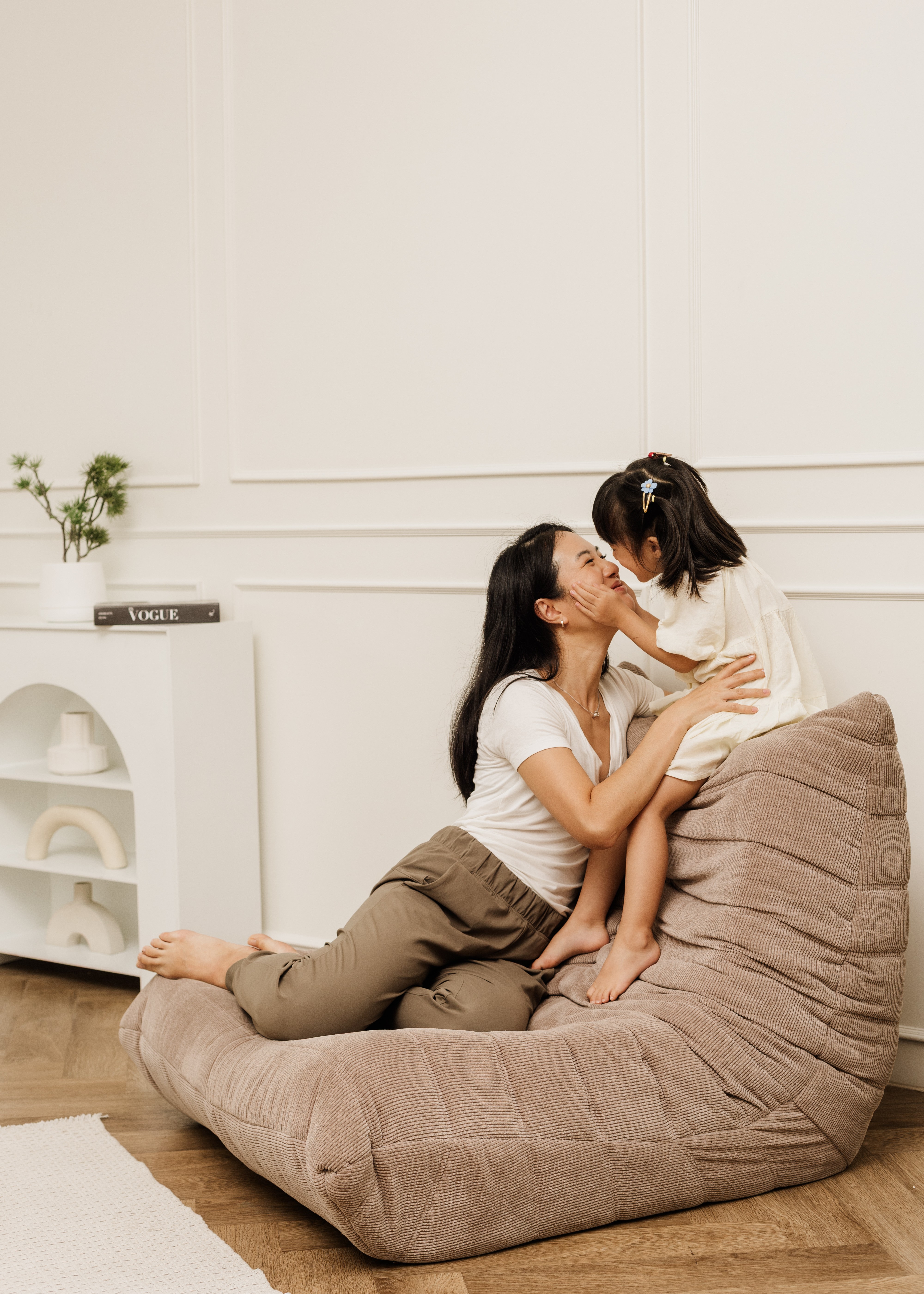
My daughter Augie just turned five. School applications are open, and so are approximately forty browser tabs and a husband conversation that has been running for three weeks without a conclusion. If you have a child in Bangkok, you know the drill. "Where does your kid go to school?" carries a weight here that tells you the answer matters far beyond academics. It determines which world your child lives in.
In Bangkok, that world comes with a forty-acre campus, an Olympic pool, a performing arts centre, and a robotics lab. Fees to match: at the top end, over a million baht a year per child. The average Thai salary is around 15,900 baht a month (1). One year of school costs the equivalent of over five years of someone else's wages. That number sat funny with me the first time I saw it. It still does.
The real tension
The World Bank's 2023 report, Bridging the Gap, ranks Thailand as the 13th most unequal country out of 63 measured by income, with over half the country's wealth held by the richest ten percent (2). A Credit Suisse report found that more than two-thirds of the country's assets are controlled by the richest one percent (3). In Bangkok you can see it from the same corner: a gated school compound on one side, a street vendor cooking pad kra pao on a 10,000 baht motorbike on the other. When your child goes to school inside that compound, comes home to a condo with a nanny and a driver, and does this every single day for eighteen years, a very particular worldview can calcify: that this is just how life is.
A former elite school student in Singapore describes how her classmates were genuinely shocked to read in a textbook that most Singaporeans live in public housing. They had grown up in landed property, ferried by drivers, and had simply absorbed all of it as the standard version of a normal life.
Research published in the British Journal of Educational Studies (2022) found that institutions created to promote social harmony are, in practice, contributing to a growing educational gap between social groups (4). Two new international schools open somewhere in the world every single day. Thailand alone hosts over 250, growing at around ten percent annually, with wealthy Thai families now joining the customer base alongside expats.
What parents are actually divided on
Talk to enough expat parents and you find two camps, often sitting next to each other at the same school orientation.
Camp one: the internationalists. Research supports that Third Culture Kids develop genuine strengths: cultural adaptability, linguistic range, comfort with change, and a broader worldview than peers who grow up in one place. Adults who attended international schools in Asia consistently describe arriving at universities abroad already comfortable with difference, fluent in reading rooms full of people who don't look or think like them.
Camp two: the worried ones. Usually the same parents, on a different day, asking what happens when your child grows up never taking public transport, never cooking, never navigating anything without help. A teacher who has spent years in international schools in Thailand notes that even students whose families stretch every baht to pay the fees are still, in global terms, among the most privileged children in the world. Child development studies consistently find that children shielded from difficulty and consequence are less resilient, less empathetic, and less equipped for adult life (5). A good school and a sheltered home can produce a child who arrives at adulthood with extraordinary credentials and no idea how most of the world actually works.
So what do you actually do?
Parents who feel most at peace with their international school choice treat the values work as their job, not the school's:
Give them chores, even with help at home: Experts are clear: removing all household responsibility sends the message that some work is beneath your child (6). Augie makes her bed and clears her plate. She is five and fully capable of both.
Let them be bored, frustrated, and wrong: One therapist put it plainly: "Let your child experience the consequence." Solving every problem with money trains children to expect exactly that.
Talk about money honestly, and early: Where it comes from, what effort it costs, why not everyone has the same amount. Research links genuine gratitude with lower entitlement and higher life satisfaction in children (7).
Get out of the compound, regularly: Take the BTS. Eat where there's no English menu. Let your child interact with people outside the expat world as a habit, not a lesson.
Model how you treat people who work for you: Children are watching how you speak to your nanny, your driver, the security guard downstairs. If those people are background characters to you, they will be to your children too.
Volunteer together, consistently: Often enough that your child understands giving back is not a school project.
The question I keep coming back to
We want the best for our kids. That ambition and an awareness of their privilege can sit in the same person, in the same decision.
Two months ago we changed nannies. Augie adored the previous one and had always treated her with respect. The new nanny is quieter, more gentle, and Augie started ordering her around, dismissive in the way five-year-olds can be when they sense they can get away with it. My first instinct was that the nanny needed to be firmer. Then the honest answer came up: I had been frustrated with the transition, and that frustration had been showing up in my tone, my body language, the way I spoke around the new nanny. Augie was watching all of it and took her cues from me.
The most powerful curriculum in your household is you. How you speak to the people who work in your home, whether you're tired or grateful, is what your child is actually absorbing. I am her biggest teacher, and that has nothing to do with which school she goes to.
References
- National Statistics Office of Thailand, Average Monthly Earnings, Q3 2025.
- World Bank. Bridging the Gap: Inequality and Jobs in Thailand, November 2023. worldbank.org
- Credit Suisse, Global Wealth Report, cited in United Nations Thailand, Thailand Economic Focus, 2021. thailand.un.org
- Bailey, L. International Schooling: Privilege and Power in Globalized Societies, reviewed in British Journal of Educational Studies, Vol. 70, No. 3, 2022. tandfonline.com
- Lieber, R. The Opposite of Spoiled: Raising Kids Who Are Grounded, Generous, and Smart About Money. HarperCollins, 2015.
- Sax, L. The Collapse of Parenting: How We Hurt Our Kids When We Treat Them Like Grown-Ups. Basic Books, 2016.
- Hussong, A. et al. Gratitude and child development research, University of North Carolina at Chapel Hill, 2019.
About the Author
Sheena Low is raising 5-year-old Augie while building Somnii, a maternal wellness brand creating supplements and connection games for mothers. She moved to Bangkok in 2019, heavily pregnant, for the full-time nanny help, five years later, she's still here and with no plans to return to Sydney. Before Somnii, she spent a decade building and exiting Super Fly Honey, a global pole activewear brand.
www.feelsomnii.com | Instagram: @sheenainwonderland