
Breaking the Cycle and Redefining Childhood Patterns
By Maheshika MacKenzie-Baker
I often think back to the first year of my firstborn and marvel at how simple parenting felt. My sole mission was to keep her alive, clean, and safe. As someone who thrives on structure and organization, I believed I was absolutely smashing it. I had schedules, pre-made baby food, and a pumping routine so precise it could rival a factory assembly line. And the best part? My baby never talked back. Parenting felt like a breeze.
Then, she began to talk. And walk. And have opinions. Things suddenly felt… complicated. My tried-and-true method of control started to falter. My once cooperative baby now had her own ideas, and if she didn’t follow my rules, I took it personally. I saw her defiance as a reflection of my parenting. Threats like “No TV if you don’t listen” became my go-to. After all, based on my previous experience as a teacher and someone raised with a solid foundation of rules and regulations, I thought this was how it was done.
Looking back, I’m not blaming my parents. They were doing their best with the tools they had, just as their parents had done before them. But all too soon, it became glaringly obvious that my approach wasn’t working. My daughter began pulling away from me emotionally. She favored her dad and cried when he wasn’t around, and I felt an aching sense of disconnection.
The breaking point
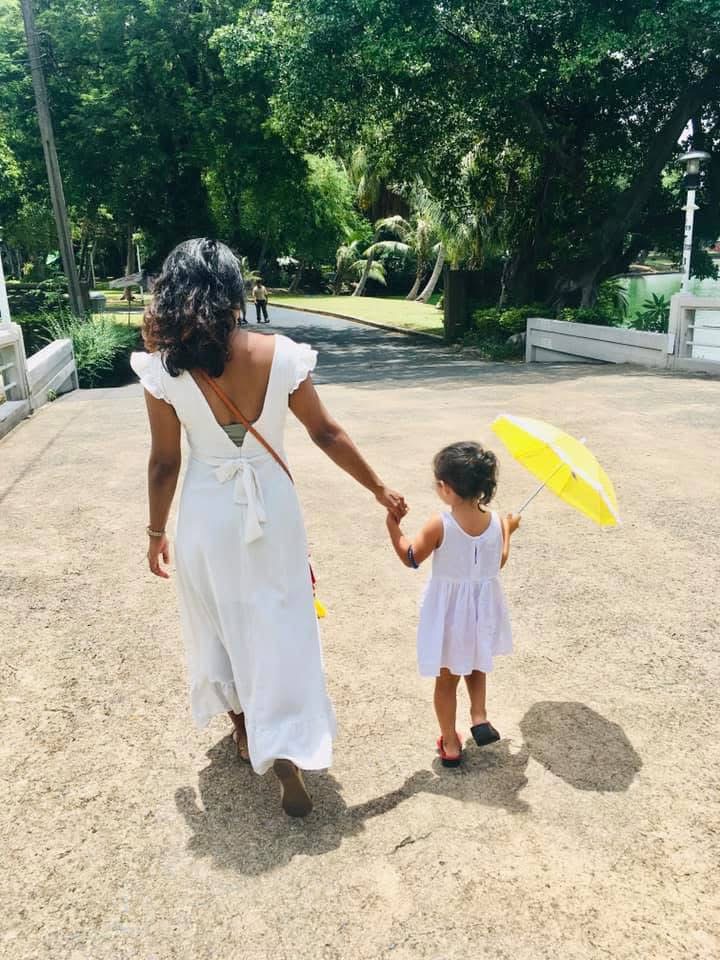
One day, I lost my temper and raised my voice at her. She was barely two years old, and her reaction shattered me. She cried, and I broke down too. This was the first time I had cried in front of her, and her tiny hands reached out to comfort me. In that raw moment, I apologized to her. I explained that I’d had a long day and wasn’t angry at her but at the situation. Then we decided to have a "picnic" in the garden as a way of reconnecting, something she loved role-playing at the time. Over the years, this became our go-to whenever we needed to connect or reconnect. A photo from that day still hangs on my wall, a reminder of the day our journey shifted.
Discovering my parenting style
Determined to rebuild our bond, I dove into research. I read about different parenting styles, including authoritarian, permissive, gentle, and authoritative parenting. It was clear that gentle parenting resonated deeply with me, not because it was the easiest path, but because it aligned with the kind of relationship I wanted with my child.
Gentle parenting emphasizes respect, emotional regulation, and positive discipline. It’s not about being permissive or avoiding boundaries but offering clear expectations while ensuring that the child feels heard and valued. By creating a "safe haven" that includes the four Ss—Safe, Seen, Soothed, and Secure—this approach fosters emotional resilience and promotes better behavior (1).
On the other hand, authoritative parenting—often considered the gold standard in research—balances warmth and structure. Like gentle parenting, it stresses the importance of setting clear rules but also allows for open communication. In contrast to authoritarian parenting, authoritative parenting creates an environment of mutual respect and understanding. Research has shown that this style supports children’s social competence and academic success (2).
Breaking patterns with small changes
Having learned from that first experience of being open with my daughter, one practical shift I made was openly communicating my needs. My daughter and I spend long days together, from our morning commute to school to being in the same classroom to the evening ride home. As someone who gets overstimulated without breaks, I began calmly explaining when I needed a “brain break” to recharge. I made sure to reassure her that she hadn’t done anything wrong. Initially, she didn’t quite understand, but with consistency, it began to click.
Over time, she started using the same language. If I apologized for snapping after a tough day, she’d respond with a heartfelt “It’s okay, Mommy.” She even began helping me regulate. Once, frustrated by traffic, I muttered something under my breath, and she piped up, “Mummy, take deep breaths. We can’t change the traffic, but look, the other side is worse. We’re lucky!” Moments like these left me in awe.
Redefining boundaries as a foundation
Research consistently shows that children feel secure when they understand boundaries. Gentle parenting doesn’t mean there are no consequences—it means consequences are communicated calmly and respectfully. This is a critical area where gentle and authoritative parenting overlap. Both emphasize teaching children the importance of responsibility while acknowledging their feelings. When my daughter makes a mistake, I always remind her that she is loved.
One day, after repeating a mistake despite my earlier guidance, she retreated to her room in tears, whispering, “Why would anyone want a daughter who does this?” My heart broke. I sat with her and reassured her that mistakes are part of learning and don’t define her worth. We reflected on the situation and ended our talk with tears, but this time, they were healing ones.
Recognizing limitations in gentle parenting
Although gentle parenting has been successful in building a better relationship with my children, I have yet to find effective methods to help my son when he is going through challenging behaviors. Research has shown that gentle parenting techniques can be less effective for more serious behavioral challenges, such as aggression or oppositional defiance (2). I’m still figuring out how to adapt and apply these principles to my son’s needs. Perhaps it’s a long game, and patience is the key. I’ll tell you when I figure it out.
Breaking generational cycles
As I embraced gentle parenting, I reflected on my own childhood. Guilt was a constant companion when I was young. I often felt responsible for things beyond my control. Determined to break that cycle, I make it a point to tell my kids that my hard days have nothing to do with them. They’re not responsible for carrying the burden of my emotions.
Another realization was how much I’d relied on external validation growing up. I often felt the need to look, act, and be a certain way to please others. It wasn’t until my late 20s that I began to value internal validation. With my kids, I prioritize teaching them to love themselves as they are. I encourage them to find joy in their achievements and not seek approval from others.
When my daughter started noticing her appearance and worrying about others’ opinions, I drilled into her the idea that beauty comes from within. Integrity and kindness matter far more than looks. I’d ask, “Do you like your drawing?” If she said yes, I’d reply, “That’s all that matters.” Slowly but surely, she’s learning to trust her own judgment.
The ripple effect of change
In my opinion, parenting isn’t just about raising children; it’s about growing alongside them. The more I practiced gentle parenting, the more I noticed changes in myself. I became more patient, empathetic, and mindful.
Recently, I had a breakthrough. Someone’s cold behavior toward me would have once sent me spiraling into self-doubt. But this time, I thought, “I am proud of who I am and what I do. If they’re uncomfortable, that’s on them.” It took me decades to reach this level of self-assurance, but my seven-year-old already embodies it. She’s unapologetically herself, and I couldn’t be prouder.
Practical steps for breaking the cycle
Some practical elements of gentle parenting that have worked for us include:
Modeling behavior: Children mirror what they see. Admitting and apologizing when you’re wrong teaches them humility and accountability.
Validating emotions: Instead of dismissing feelings, acknowledge them. Saying, “I see you’re upset,” helps children feel heard.
Focusing on solutions: When mistakes happen, shift the conversation to “What can we learn from this?”
Encouraging independence: Allowing children to make choices fosters confidence and decision-making skills.
Does this mean parenting is a breeze now?
Absolutely not! Every few months, something new comes along that challenges us, and we have to think of new ways to handle it. Now, we have a three-year-old boy, and I’m learning fast that the techniques I used with my daughter don’t always work with him. Plus, managing two children is a whole different ballgame—less time, less patience, and less energy.
But we persevere. My connection with my daughter inspires me every day to keep at it and to keep doing my best. I hope that they’ll one day do their best for their own children.
The takeaway: a new path forward
Parenting is an ever-evolving journey. The rules and methods that worked for one generation may not work for the next. Being open to growth and willing to adapt can build deeper connections with our children. As the saying goes, “We can’t prepare the road for our children, but we can prepare our children for the road.”
Gentle parenting has taught me that connection trumps control. It’s not about being perfect but about being present. And every day, as I watch my daughter grow into a kind, confident, and self-assured person, I’m reminded that it’s worth the effort.
Photos courtesy of the author
References and further reading
- Moore, S., (2021) “The scientific validation of gentle parenting.” The Natural Parent Magazine 2021. Available at: thenaturalparentmagazine.com/the-scientific-validation-of-gentle-parenting/
- Parenting Translator (n.d.) “Parenting Translator.” Available at: https://parentingtranslator.org/
Ockwell-Smith, S., (2023) Because I Said So!: Why Society is Childist and How Breaking the Cycle of Discrimination Towards Children Can Change the World. London: Piatkus.
About the author
Blending Sri Lankan and Scottish roots, Maheshika (Myshi) Mackenzie-Baker now lives in Thailand with two little kids of her own. Myshi has been an educator in Thailand for over 10 years and is currently a learning designer at VERSO International School. You can reach her at: maheshi.mackenzie@gmail.com; LinkedIn: linkedin.com/in/maheshika-mackenzie-baker-56564532; X @BakerMyshi.